
Under the Influence
Mississippi State researchers are dedicated to recovery research and family support
By: Carson McFatridge
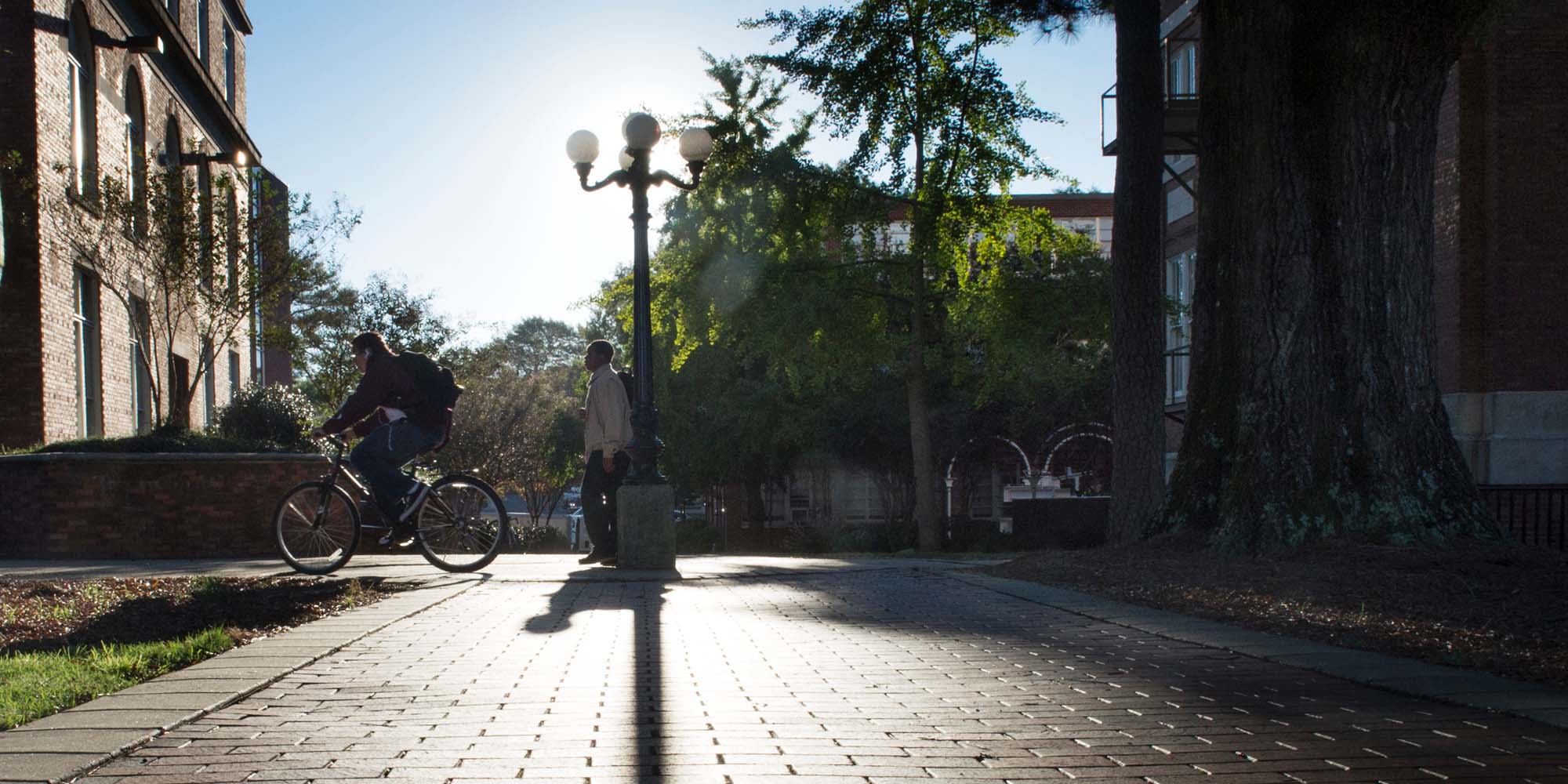
Addiction often drives individuals into isolation, removing the social support needed to overcome. (Photo by Megan Bean)
Each year, the Substance Abuse and Mental Health Services Administration surveys 70,000 Americans for self-reporting of mental health conditions, substance use, and pursuit of treatment. The data suggests that some 31.7 million adults aged 18 or older perceived that they had a problem with their use of alcohol or drugs. Among those, 74.3% considered themselves to be in recovery.
Behind these numbers is a broader reality: substance use disorders rarely occur in isolation; they ripple outward, affecting caregivers, family members, and friends who are often left trying to navigate challenges they may not fully understand.
Researchers with the Mississippi Agricultural and Forestry Experiment Station, or MAFES, are working to better understand how substance use disorders affect not only individuals but also their families. Dr. Leah Pylate, an associate professor in Mississippi State's Department of Biochemistry, Nutrition, and Health Promotion, has dedicated her career to supporting those struggling with addiction while advancing research that reduces stigma and improves understanding of recovery. She pointed to one statistic that has shaped much of her work.
"One study produced by colleagues in the field predicts that nearly 100 million adults globally are likely to be affected by a relative's addiction problems," she said. "This is a staggering number, but the reality is that these family members can be one of the greatest tools for enhancing recovery. It is important that we equip them with the proper knowledge and understanding."
Many colleges and universities offer collegiate recovery programs, or CRPs, which support students in recovery by providing fellowship, financial assistance, academic mentoring, accountability, and community. These programs often serve emerging adults, typically ages 18 to 25, who are navigating the transition between adolescence and independent adulthood. While many studies focus on the experiences of students in recovery, relatively few examine the role families play in supporting that journey. Pylate's research seeks to address that gap.
To conduct her study, Pylate invited current and former participants in Mississippi State's Bulldogs in Recovery program, along with family members of their choosing, to complete an interview. Nineteen individuals participated, including five students/alumni and 14 family members. The project aimed to answer four questions exploring the family's role in the recovery process, ways family members may help or hinder recovery, how students influence their families, and how collegiate recovery programs can better support both students and families.
After collecting responses, researchers used the Braun and Clarke thematic analysis method to identify common patterns. This process involved familiarizing themselves with the data, generating initial codes, organizing those codes into broader themes, and refining those themes into final conclusions. Three primary themes emerged.
The first theme revealed that families often enhance recovery through supportive behaviors. One participant shared that her sister provided meaningful emotional support simply by being available, while another father described consistently attending his son's sobriety celebrations and milestone events.
The second theme focused on how a lack of understanding about addiction and recovery can create obstacles. One mother expressed regret that she had not educated herself earlier about the 12 steps of recovery, believing that greater understanding would have helped her better support her son's journey.
The third theme highlighted the experiences of students who lacked family support altogether. Although these students often faced additional challenges, many still persevered. One father described being his son's sole source of support while observing the strain caused by the absence of assistance from other family members.
Pylate emphasized that family support is not limited to biological relatives. Rather, family can include anyone with whom an individual shares emotional bonds, trust, and a sense of mutual support. She also outlined several practical ways families can strengthen recovery outcomes.
"In today's reality, we often find the largest barrier to improvement is the stigma that surrounds addiction and recovery," she said. "First, self-education is incredibly important. From there, improving communication, providing for basic needs to alleviate possible stressors, taking personal accountability, and attending meetings and recovery functions can make a difference."
One especially promising finding from the research was the concept of parallel recovery, where family members actively pursue personal growth while supporting a loved one's sobriety.
"We found scenarios where a student was supported, and they didn't feel alone since a family member was willing to admit their own shortcomings and work to improve themselves alongside the student," Pylate said. "This shared journey gave students accountability and fostered a stronger sense of connection among family members."
Before joining the faculty, Pylate served as director of Mississippi State's Division of Health Promotion and Wellness, where she helped establish the university's Collegiate Recovery Program. Today, staff members like Trey Griggs continue that mission through Bulldogs in Recovery, which currently serves eight full-time members through weekly events and support services.
"Dr. Pylate's research and knowledge of family support can be applied here in ways that directly benefit our students," Griggs said. "One of our most successful programs is Family Weekend, where parents, siblings, and close friends can attend seminars highlighting successful recovery stories, participate in a sober tailgate, and engage in recovery ally training."
As substance use recovery continues to impact millions of Americans, Pylate's work highlights that the path to healing is shaped not only by the individual, but also by those around them. In many ways, recovery happens under the influence of family, support systems, and shared understanding, where encouragement can be just as powerful as adversity. By reducing stigma, strengthening family involvement, and providing meaningful resources, Mississippi State is helping students and their loved one's harness that influence to create healthier futures together.
This research was funded by the Mississippi Agricultural and Forestry Experiment Station.
We found scenarios where a student was supported, and they didn't feel alone since a family member was willing to admit their own shortcomings and work to improve themselves alongside the student.
Dr. Leah Pylate
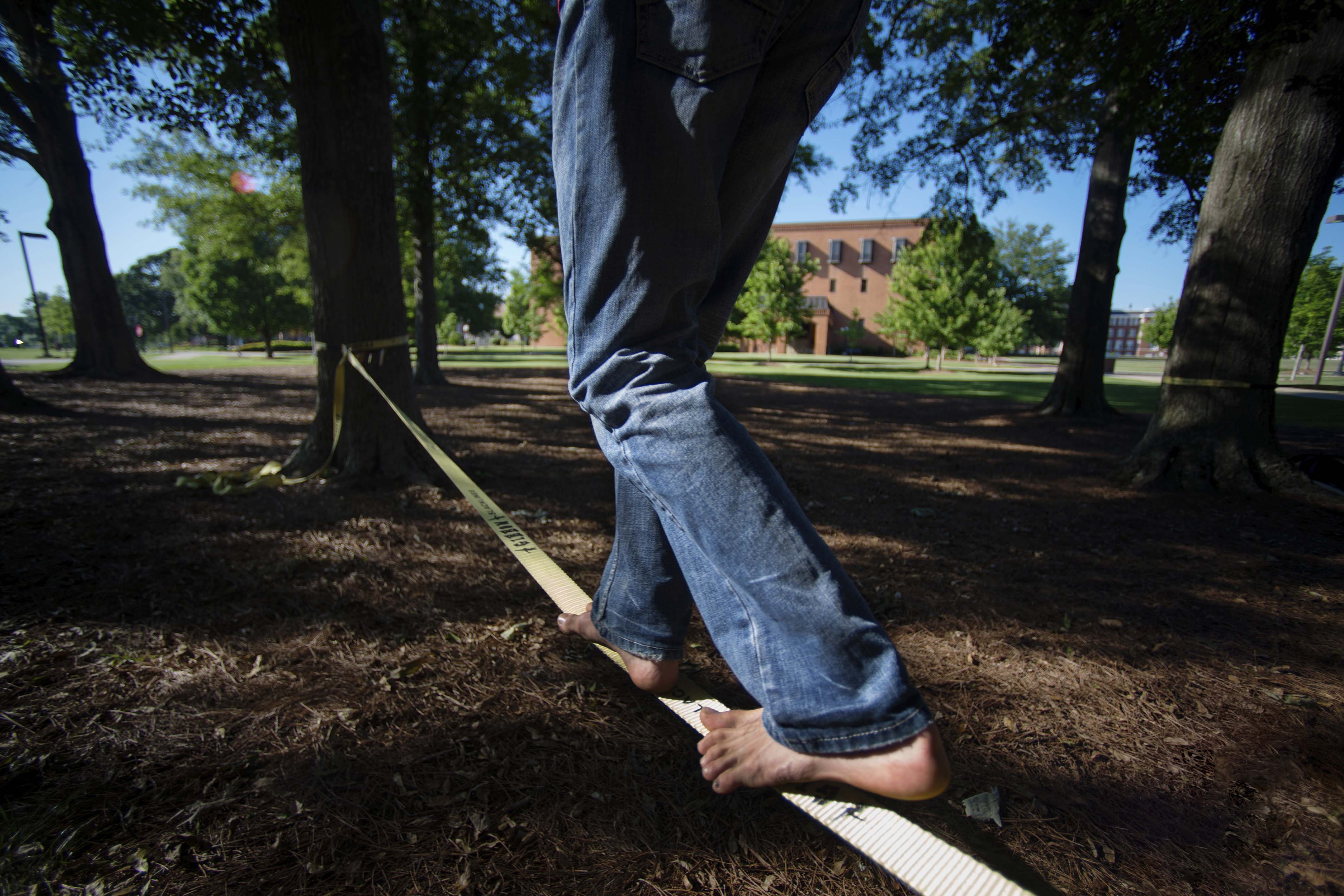
According to the Journey Recovery Center, "Recovery from addiction is often compared to walking a tightrope, a delicate, precarious balance where every step must be measured and the rope itself is constantly swaying." (Photo by Raeley Stevens)
Behind the Science

Leah Pylate
Associate Professor
Education: B.S., Health Management, Southeast Missouri State University; MBA and M.S., Food Science, Nutrition, and Health Promotion; Ph.D., Human Development and Family Science, Mississippi State University
Years At MSU: 15
Focus: Family recovery and college student health
Passion At Work: Educating and supporting families who are working through a recovery process from alcohol, drugs, or an addictive behavior with their loved ones.