
The Weight of Breathing
Exploring links between obesity and respiratory disease
By: Meg Henderson

Inhalers deliver medication directly to the lungs to relieve symptoms of COPD and asthma. (Photo by David Ammon)
Take a deep breath in ... then slowly let it out. These are familiar words for anyone who has ever taken a yoga class or practiced guided mindfulness. Many of us hear it from our doctor, with a stethoscope pressed against our back. But for an estimated 545 million people who suffer from chronic respiratory diseases, breathing is not so simple, or relaxing.
As the global obesity rate has doubled in the last three decades, emerging evidence suggests that body composition and dietary choices may play a role in developing chronic respiratory diseases like COPD and asthma. Dr. Oladayo Apalowo, a scientist in the Mississippi Agricultural and Forestry Experiment Station, or MAFES, led a study to determine whether our bodies' structure and even the genes we inherit raise the risk for these diseases.
"COPD is currently the fifth leading cause of mortality in the U.S., and it is projected to become the third leading cause by 2030," Apalowo said. "Understanding the lesser-known causes could drive us to discover how to identify and manage some of these rising cases."
Apalowo's interest in the relationship between genetics and obesity began during his doctoral studies at Mississippi State. Currently a postdoctoral associate in the Department of Biochemistry, Nutrition and Health Promotion at MSU, he wanted to try to identify specific genes that may contribute to these related conditions.
To begin this needle-in-haystack search, Apalowo needed access to large biobank datasets: collections of anonymously donated biological samples, along with data related to those samples, such as genetic and lifestyle information. He turned to the University of Bristol's IEU (Integrative Epidemiology Unit) OpenGWAS project, which freely provided one dataset for body composition metrics, such as BMI, fat-free mass, and body water mass; dietary factors such as consumption of alcohol and coffee; and a separate set for asthma and COPD. The UK Biobank and FinnGen Biobank provided two sample populations that, both being European, would not vary widely in genetic makeup. For each metric he analyzed, sample sizes from the biobank datasets ranged from 429,000 to 462,000 individuals.
"These kinds of datasets give us confidence in our analyses because the sample sizes are very large, and the data are constantly updated," Apalowo said. "Using two independent cohorts also strengthens the analysis by reducing the chance that the results are driven by overlap in the samples: the UK Biobank was used for metabolic factors, while FinnGen was used for disease outcomes."
Central to the study's methodology is a process called Mendelian randomization, which isolates genes from environmental influences, acting as a "control" group for the variables. In this study, applying Mendelian randomization methods solidified the relationship between obesity-related genetic markers and the higher probability of developing asthma and COPD.
Most notably, Apalowo and his team discovered two key genes, SLC39A8 and POC5, which have exceptionally strong genetic relationships with chronic respiratory diseases, particularly in individuals with specific body composition traits and frequent alcohol consumption. SLC39A8 encodes a key gene that regulates zinc, manganese, and iron levels within cells, and POC5 contributes to a cell's centriole integrity, or its structural and functional stability. While neither is inherently harmful, "missense" variants of the genes—genetic alterations which change their structure—consistently show up in people with both obesity traits and asthma or COPD. The "missense" variants dysregulate normal immune and inflammatory responses, and they increase susceptibility to these diseases.
From these findings, the study was able to yield two recommendations to individuals whose body composition puts them at greater risk: reduce weight and reduce alcohol consumption.
Fortunately, for the more than one billion coffee drinkers in the world, the data did not show coffee consumption raises the risk of chronic lung disease.
"The two genes Dr. Apalowo identified provide additional information on better understanding and preventing chronic respiratory diseases," said Dr. Wes Schilling, a William L. Giles Distinguished Professor and director of the MSU Food Science Innovation Hub. "Genetic screening for these genes could inform future research and development of targeted interventions to improve lung health and quality of life."
Apalowo contended that the study has important implications for managing chronic lung disease in individuals with obesity, and he plans to keep working to answer the many complex questions surrounding obesity as a medical condition.
"Going forward, we'll continue to work on understanding other factors contributing to the rising obesity epidemic, which has become a serious public health issue both here in Mississippi and worldwide," he said. "As a researcher beginning my career, I'm grateful to the support that MAFES has given us to do this important work."
This research is funded by the Mississippi Agricultural and Forestry Experiment Station.
COPD is currently the fifth leading cause of mortality in the U.S., and it is projected to become the third leading cause by 2030. Understanding the lesser-known causes could drive us to discover how to identify and manage some of these rising cases.
Dr. Oladayo Apalowo
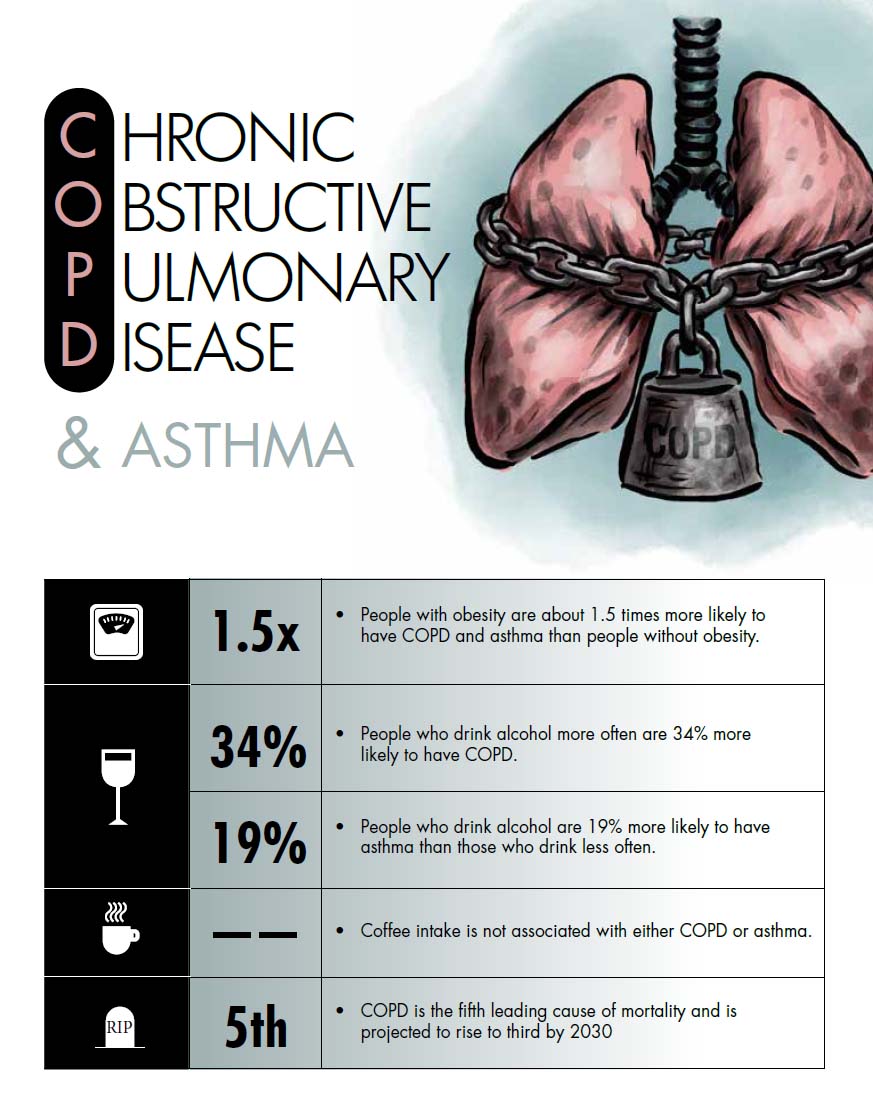
The Weight of Breathing Infographic