
Cracking the Code of Cartilage Loss
Investigating a key enzyme's role in a promising osteoarthritis treatment
By: Meg Henderson
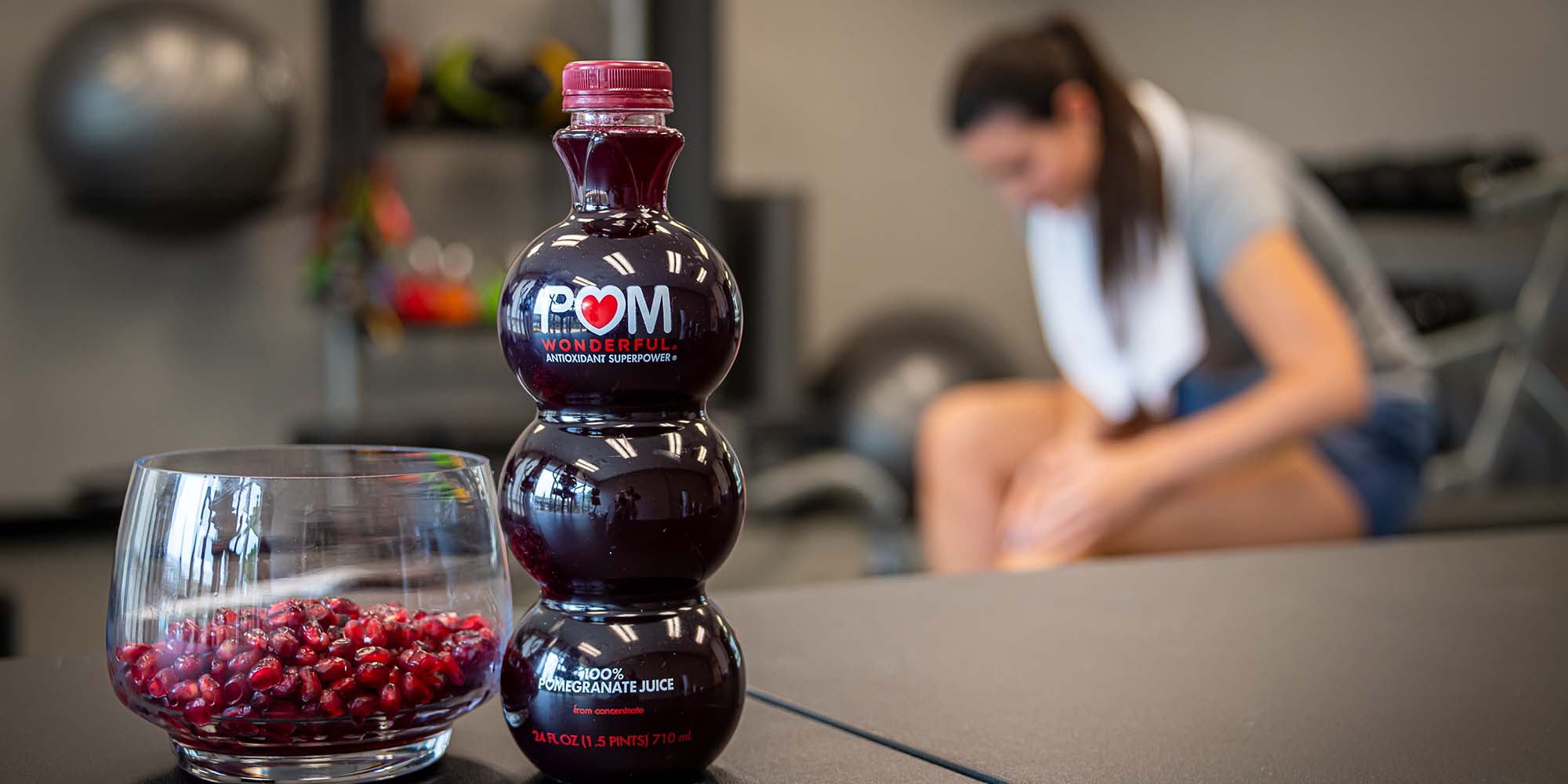
A visitor exercises at the Courtyard by Marriott Starkville MSU at The Mill while enjoying pomegranate juice and seeds for refreshment. Rich in antioxidants and polyphenols, pomegranates may help reduce inflammation and support joint health. (Photo by David Ammon)
Originating in Central Asia around 4000 BC, the pomegranate has been the subject of both myth and medicine. Hailed as the "heavenly healer," traditional Persian and Islamic medical textbooks have documented the versatile applications of this ancient superfruit. Today, scientists in the Mississippi Agricultural and Forestry Experiment Station, or MAFES, are exploring the power of pomegranates to treat osteoarthritis, or OA, which affects nearly 600 million people today, most over age 50. Mississippi's population of adults 65 and older has grown by over 30 percent since 2010, so finding a potent, safe, and accessible treatment is critical both here at home and around the world.
Dr. Steven Elder, a MAFES scientist and professor in Mississippi State University's Department of Agricultural and Biological Engineering, has conducted biomedical engineering research to improve orthopedic health for over two decades. In recent years, he has investigated the potential of a natural compound found in the fruit, the antioxidant phenol punicalagin (PCG). When PCG hits the intestine, it is hydrolyzed into ellagic acid (EA), a compound shown to protect against joint deterioration caused by OA.
Elder led this latest study to test his hypothesis that these compounds act by inhibiting one of the main culprits of painful, swollen joints: the cartilage-devouring enzyme ADAMTS-5, which plays an outsized role in the disease's development.
"Osteoarthritis patients have treatment options like surgery and physical therapy, but there is no effective pharmacological intervention for protecting cartilage from erosion," Elder said. "Studies in animals have shown that taking punicalagin orally is safe and that its anti-inflammatory properties help ease OA symptoms in animal models. But we wanted to know whether punicalagin and ellagic acid work by blocking a key enzyme that destroys cartilage."
To answer this question, Elder and his interdisciplinary team, including undergraduate laboratory assistant Austin Breland, began the study, built on four prior years of research on these enzymes. Dr. Nicholas Fitzkee, a professor in the Department of Chemistry, also contributed to the study.
First, the team ran computer (in-silico) models to determine whether PGA and EA would bind to ADAMTS-5 both physically and energetically. They downloaded 3-D structures of all three enzymes and used specialized software to perform a "fit" test called molecular docking to demonstrate how effectively PCG and EA would attach to ADAMTS-5, examining their entry from numerous angles and giving each a score based on their binding energy. The software then narrowed down the best "fits" to hypothesize which molecular interactions would most likely behave the same way in a human joint.
"The molecules work like a lock and key, where ADAMTS-5 is the lock, and punicalagin is the key," said Fitzkee. "The docking software analyzes all the molecular forces involved, modeling many potential combinations and identifying the best fit in terms of both shape and energetic response. This framework for molecular compatibility is used for all sorts of drugs and lies at the heart of modern pharmaceutical chemistry."
With encouraging results from the simulations, the team went to the lab for in-vitro experiments conducted on freeze-dried pig cartilage, which is not equivalent to live human cartilage but was sufficient to test the compounds on joint cartilage. They compared cartilage samples soaked in solutions of ADAMTS-5 enzymes, samples soaked in the enzyme plus a protease inhibitor "cocktail" with combinations of the pomegranate compounds, and control samples. The scientists further tested PCG's impact on glycosaminoglycans, or GAGs, the molecules that keep cartilage hydrated and absorb shock and which are attacked by ADAMTS-5. They stained the treated and untreated samples with blue and red dyes that would bind to GAGs. After the incubation period, the bright colors in the treated samples verified that the pomegranate compounds preserved more GAGs than the untreated samples, which turned pale.
"When we ran these tests, we could not prove whether the compounds acted specifically on ADAMTS-5 or on other enzymes that break down GAGs, but we could certify they had a protective effect nonetheless," Elder said.
Although the results were not what they had hoped for, Elder has not abandoned his hypothesis. Unlike a pomegranate supplement, a drug developed from the fruit's compounds would have to be scientifically verified and extensively tested to earn FDA approval, so this research is an important step.
"There may be more finely tuned tests we could run, or we might work with our colleagues in the chemistry department to develop a more sensitive assay," he said. "We're confident PCG has cartilage-preserving properties, but we want to better understand the tissue-degrading enzymes it inhibits. Everything still points to these compounds being a potentially disease-modifying osteoarthritis drug, so now we're trying to optimize the formulation for the best delivery system into the joint and the most impactful long-term effects."
Remaining hopeful, Fitzkee mentioned opportunities for future research, running more complex models that allow the molecules to move and flex as they do in the body, and models that optimize the inhibitors' chemical structure to improve their interaction with ADAMTS-5.
"My parents both struggled with arthritis, so it's an issue that hits close to home," he said.
"There won't be a drug on the shelf tomorrow, but I'm encouraged by the progress we're making and hopeful that continued research will bring us closer to more effective long-term solutions than we have today."
This research was funded by the National Institute of Arthritis and Musculoskeletal and Skin Diseases of the National Institutes of Health. It is supported in part by the Center for Biomedical Research Excellence in Pathogen Host Interactions and the Mississippi Agricultural and Forestry Experiment Station. Additional support was provided by MSU's Judy and Bobby Shackouls Honors College. Dr. Matthew Ross, a professor in the MSU College of Veterinary Medicine's Department of Comparative Biomedical Sciences contributed to this study.
Osteoarthritis patients have treatment options like surgery and physical therapy, but there is no effective pharmacological intervention for protecting cartilage from erosion.
Dr. Steven Elder
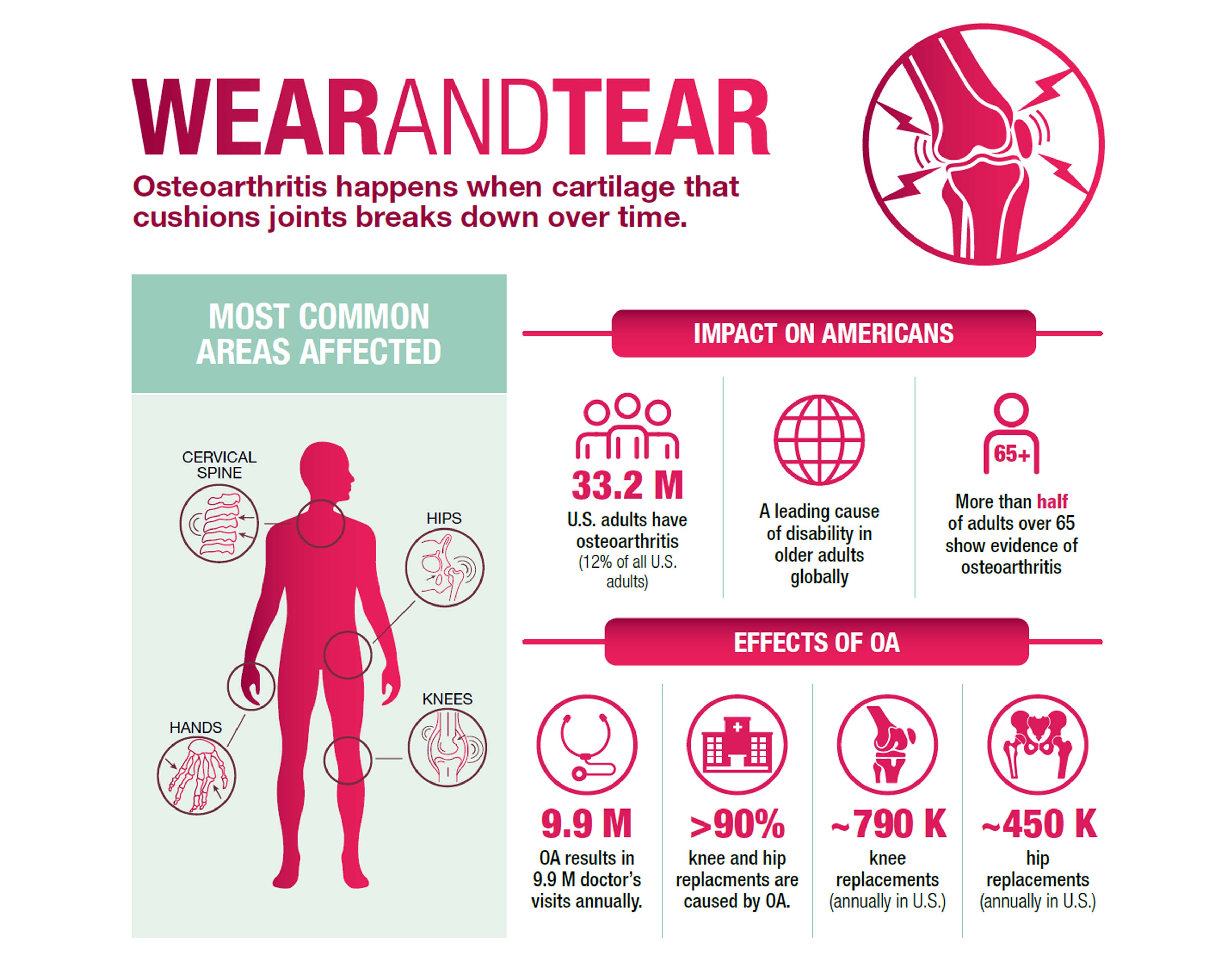
Sources: Centers for Disease Control and Prevention, National Institutes of Health, American Academy of Orthopedic Surgeons, American Association of Hip and Knee Surgeons, U.S. Department of Health and Human Services
Behind the Science

Steven Elder
Professor
Education: B.S., Biomedical Engineering, Duke University; M.S., Biomedical Engineering, University of Iowa; Ph.D., Biomedical Engineering, University of Michigan
Years At MSU: 27
Focus: Orthopedics, specializing in osteoarthritis treatment and cartilage regeneration
Passion At Work: I am passionate about training young scientists and helping them prepare for the next phase of their careers.

Nick Fitzkee
Professor of Chemistry and Director of the MSU Nuclear Magnetic Resonance Facility
Education: B.S., Computational Physics, Carnegie Mellon University; Ph.D., Biophysics, Johns Hopkins University
Years At MSU: 15
Focus: How biological systems interact with surfaces at the molecular level
Passion At Work: I enjoy helping students to take ownership of their research projects, especially when they realize the impact they can have outside the classroom.