
Roots of a Healthy Life
How early influences shape lifelong habits
By: Kaitlyn Church
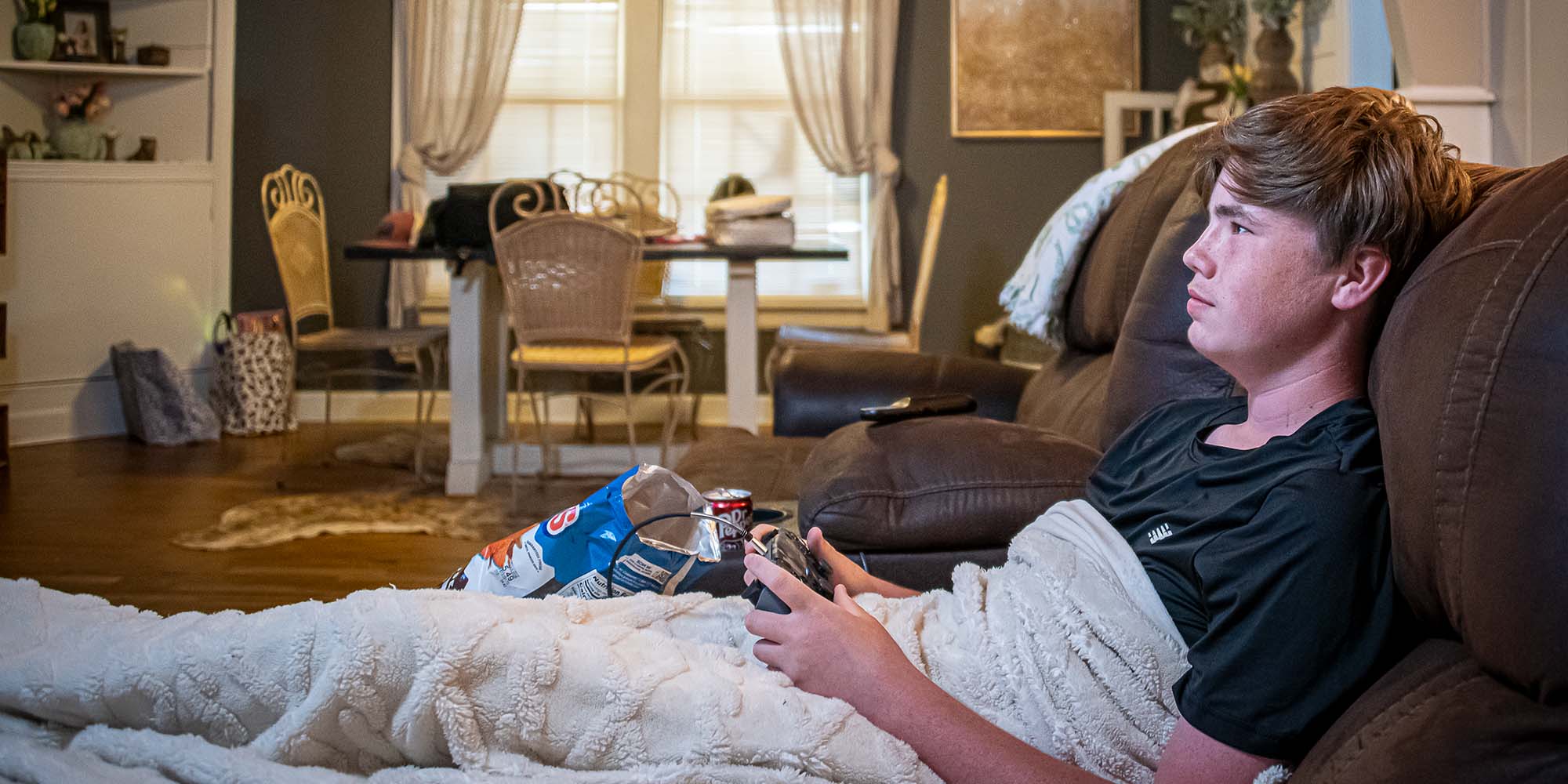
Many teenagers spend more time engaging with video games and electronic media than participating in outdoor play. (Photo by Karen Brasher)
The habits that shape a lifetime often begin long before adulthood—sometimes before a child even realizes they are forming. What's for dinner, how afternoons are spent, and who is doing the caregiving may seem like small, everyday details. But research at Mississippi State University is showing just how powerful those early influences are.
Scientists in the Mississippi Agricultural and Forestry Experiment Station, or MAFES, are examining how caregiving environments and adolescent diet patterns shape physical activity later in life. Their findings suggest that the foundation for lifelong health isn't built in a gym or a clinic, but at home, through relationships, routines, and daily choices.
Dr. Rahel Mathews, assistant professor in the Department of Biochemistry, Nutrition and Health promotion and MAFES researcher, said her interest in childhood nutrition and long-term health outcomes stems from understanding how to prevent obesity and promote healthier lifestyles over time.
"I'm interested in better understanding children's risk for being overweight and obese across their lifespan, and identifying patterns that help prevent these outcomes," Mathews said. "When we think of the socioecological model for children, parents, and guardians have a large role shaping their values."
That influence, Mathews explained, extends beyond parents. In Mississippi and across the United States, many children are raised in a variety of caregiving environments, including those led by grandparents—an often-overlooked group in health research and policy.
"We have an aging population because people are living longer, and in Mississippi we have a large percent of grandparents taking care of their grandchildren," Mathews said. "When we support the caregivers, we are also providing support to the children."
To explore how early environments shape long-term behavior, Mathews and her collaborators used data from the National Longitudinal Study of Adolescent to Adult Health, which follows participants from adolescence into adulthood. The dataset tracks individuals who were approximately 12 to 19 years old in the mid-1990s through their early to mid 30s, allowing researchers to observe how habits evolve over time.
Participants were categorized by household types—parent-led, grandparent-led, or multigenerational—and researchers noted patterns in diet, physical activity, and sedentary behavior across four time points. By standardizing these measures, the team was able to compare how early behaviors were carried into adulthood.
Dr. Danielle Nadorff, associate professor and researcher in the Department of Psychology, collaborated closely on the project.
"This project was a great cross-disciplinary partnership," Nadorff said. "My expertise sits on the caregiving side of the equation, while Dr. Mathews brought the nutrition science expertise that made the dietary side of the research possible."
The collaboration allowed the team to examine how caregiving and nutrition work together to influence long term health. One of the main findings related to the lasting impact of an adolescent's diet.
"Our findings show that adolescents who have a higher nutrition pattern at baseline, or when they were first surveyed in the study, are more likely to be physically active later on in life, no matter the caregiver type," Mathews said.
In addition to diet, the type of physical activity adolescents engaged in also played a role.
"Getting outside to play does not mean you need expensive equipment or to be on a team," Mathews said. "In this study, individual type exercises seemed to be connected to habits later on. Those who participated in individual activities, such as jogging, biking, or exercising at home, were more likely to remain active in adulthood than those who primarily took part in team sports."
One of the most unexpected findings involved children raised in grandparent-led households.
"It was surprising to find a significant long-term interest in physical activity within the grandparent-led household. Contrary to our initial hypothesis, these adolescents reported higher levels of physical activity over time, particularly in individual forms of exercise," Mathews said.
For Nadorff, the findings contribute to a broader shift in how grandfamilies are understood, and challenge long-standing assumptions in existing research.
"Most of the existing literature paints grandparent care as a risk context for physical activity. Our data tells a different story, at least for solo exercises," Nadorff said.
"Grandparent-led homes are also often treated as a problem to be solved. Our data adds to a growing body of evidence that these households can be sources of real strength."
The results point to the importance of early environments in shaping behavior. Daily routines, shared meals, outdoor play, and time spent together create patterns that can remain for years.
"The bond with the caregiver can give lasting memories," Mathews said. "Most families structure their days around food. There are opportunities to shop, prepare, and cook together. Food is part of our culture."
Nadorff emphasized that these everyday choices accumulate over time.
"Caregivers are the people buying the groceries, setting the dinner table, deciding whether Saturday morning looks like cartoons or a walk around the neighborhood," Nadorff said. "Those daily, unremarkable choices stack up."
Because these behaviors are tied to relationships and identity, they often continue into adulthood.
"There is also an attachment piece here that is often underplayed," Nadorff said. "Food and physical activity are two of the earliest ways caregivers express love and connection."
The research also carries important implications for public health programs and community outreach, particularly in states like Mississippi where extended family caregiving is common.
"Public health programs can improve by recognizing that the whole family, including extended family, is a part of a child's ecosystem," Mathews said.
That includes grandparents and other relatives who play central roles in caregiving but are often excluded from traditional program design.
"Nutrition education, physical activity programming, and pediatric counseling should be built with grandparents and other caregivers firmly in mind," Nadorff said.
Ultimately, the study reinforces a simple yet powerful idea: lifelong health begins early. The habits formed during childhood and adolescence—shaped by caregivers, diet, and daily routines—can influence behavior decades later.
"This research builds on previous work showing that getting kids out to play early in life helps build lifelong habits," Mathews said. "Also, nutrition policy, education, and health promotion should include all types of guardians."
By recognizing the importance of caregiving relationships and early environments, researchers hope to inform more inclusive and effective approaches to public health—ones that reflect the realities of modern families and support healthier lives from the very beginning.
This research was funded by the Mississippi State University Office of Research and Economic Development Undergraduate Research Scholars Program and the Mississippi Agricultural and Forestry Experiment Station.
Getting outside to play does not mean you need expensive equipment or to be on a team. In this study, individual type exercises seemed to be connected to habits later on. Those who participated in individual activities, such as jogging, biking, or exercising at home, were more likely to remain active in adulthood than those who primarily took part in team sports.
Dr. Rahel Mathews

Children at the MSU Child Development and Family Studies Center enjoy outdoor play. (Photo by David Ammon)
Behind the Science

Rahel Mathews
Assistant Professor
Education: B.S., Psychology, University of Michigan; M.P.H, International Health and Development, Tulane University; Ph.D., Nutrition, Mississippi State University
Years At MSU: 7
Focus: Public health nutrition
Passion At Work: I am passionate about preventing diabetes, obesity, and other chronic diseases by providing research that can influence health education, dietetics, medical practices, and policies.

Danielle Nadorff
Associate Professor
Education: B.A., Psychology; M.S., Lifespan Developmental Psychology; Ph.D., Lifespan Developmental Psychology, West Virginia University
Years At MSU: 14
Focus: Custodial grandfamilies, rural mental health, and aging across the lifespan
Passion At Work: Bringing visibility and evidence-based support to populations the service system tends to miss, especially custodial grandfamilies and older adults in the rural South.