
Cool Cattle, Better Beef
Investigating a dietary supplement to combat heat stress
By: Meg Henderson
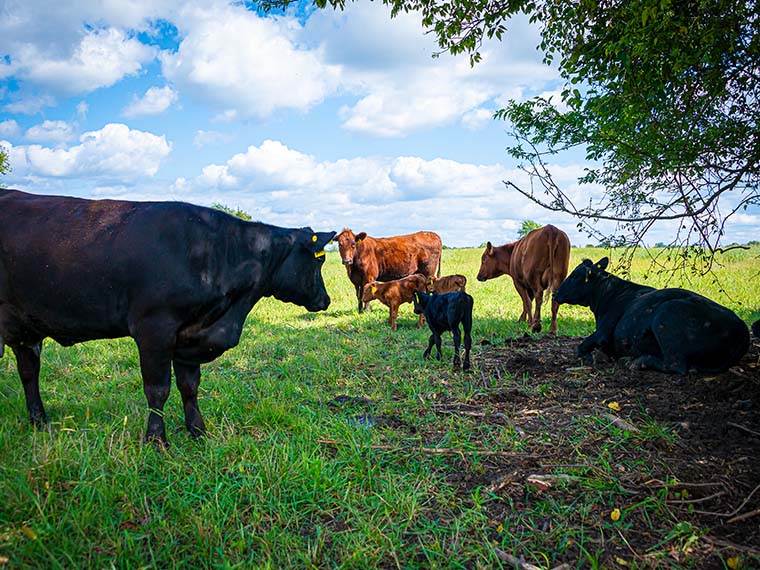
Beef cattle rest under a shade tree at the MAFES Prairie Research Unit. (Photo by David Ammon)
Cattle, like the rest of us in the South, suffer through the heat of summer. A scientist in the Mississippi Agricultural and Forestry Experiment Station has discovered a solution literally made in the shade—with a little help from a common dietary supplement.
Dr. Barbara Roqueto dos Reis, an assistant professor in the Mississippi State University Department of Animal and Dairy Sciences and scientist stationed at the MAFES White Sand Unit, set out to test her hypothesis that chromium would help relieve the effects of heat stress in cattle. Her study not only confirmed that hypothesis but also led her to discover that the supplement improves meat quality.
Reis explained that when combined heat and humidity are high, nutrients in an animal's body shift from supporting muscular growth and maintenance to thermal regulation. Body temperature rises, respiration increases, and blood shifts from the internal organs to the skin to cool the body. Panting is a sign of extreme heat stress, which, Reis explained, begins to set in at heat indices over 89 degrees Fahrenheit.
When cattle are in this state, nutrients are unavailable for functions such as meat and milk production. Compounding this physiological reaction is a decrease in appetite. When cattle eat less and take in fewer nutrients, they weigh less upon finishing. This means less profit for producers.
Reis explained that because heat stress suppresses appetite, insulin levels rise while glucose levels drop, and the animal becomes insulin resistant. Chromium is an essential trace mineral that increases insulin sensitivity when taken as a dietary supplement.
"That's what gave me the idea to test the supplement on our cattle, to see whether the chromium would increase glucose uptake from their tissues and give them more energy availability in extremely hot conditions," she said.
A few published studies discuss chromium's impact on insulin in poultry and dairy cows. But this is the first to test it on finishing beef cattle and to study heat stress reactions in any animal. Reis's study included 24 beef steers from her 150-plus herd. The subjects were divided into three groups, all receiving the same grain-based diet. The control group had neither chromium nor access to shade. The second group received only shade to isolate the impacts of both the shade and the chromium. The third group received both shade and chromium.
The steers in the chromium group weighed significantly heavier at harvest than the other two groups. The chromium group also had a higher average daily weight gain compared with the other two groups, and the quality of their meat was superior. Access to shade alone made no significant difference in weight. These outcomes suggest that this dietary supplement not only benefits the steers' health through the heat of summer but also results in a better product for the consumer.
"We took pictures of the longissimus muscle, or the 'ribeye' area, and could see the meat was more visually appealing in the animals that received chromium. There was more subcutaneous and intramuscular fat in these steers, compared to those that did not get the supplement," Reis said. "They probably had more glucose available for their muscles, which translated into a heavier body weight at the end of the project."
Reis has completed her data analysis and is working on a manuscript. She is also beginning a secondary study investigating chromium's effect on the meat quality of grass-fed cattle.
"We saw improvements in the color of the meat and subcutaneous fat of the supplemented cattle, but we need to investigate further to understand why that would happen," she said.
Reis's research could have major implications for beef cattle management. Over the winter and early spring, typically mild in South Mississippi, her cattle will get some relief. But when summer's sweltering, sticky weather returns to White Sand, she has an effective tool to help them beat the heat.
Reis indicated a range of possible future studies building on this discovery, and she said she looks forward to the opportunities to learn from her herd.
"Decreased feed intake accounts for only about half of the negative impacts of heat stress on growth and production," Reis said. "There is still a lot contributing to the process that we don't understand."
This research is funded by the Mississippi Agricultural and Forestry Experiment Station.
Decreased feed intake accounts for only about half of the negative impacts of heat stress on growth and production. There is still a lot contributing to the process that we don't understand.
Dr. Barbara Roqueti Dos Reis
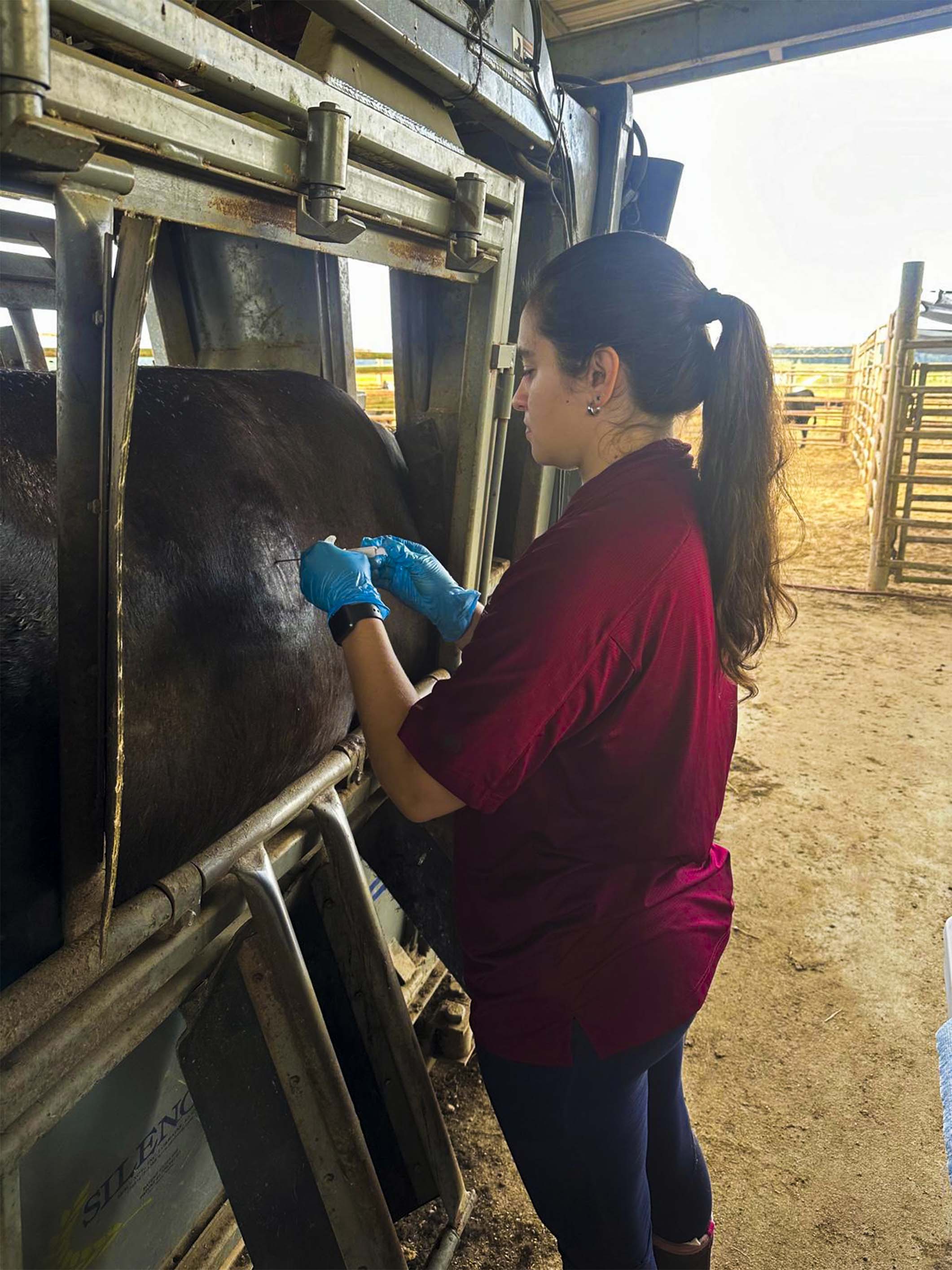
Dr. Barbara Roqueto dos Reis takes a liver biopsy from a cow. (Photo submitted)
Behind the Science

Barbara R. dos Reis
Assistant Professor
Education: B.S., Animal Science; M.S., Ruminant Nutrition, University of Sao Paulo; Ph.D., Animal Science, Virginia Polytechnic Institute and State University
Years At MSU: 2
Focus: Ruminant production, nutrition, and management
Passion At Work: I'm passionate about helping beef producers apply science-based management practices that improve productivity and animal well-being.